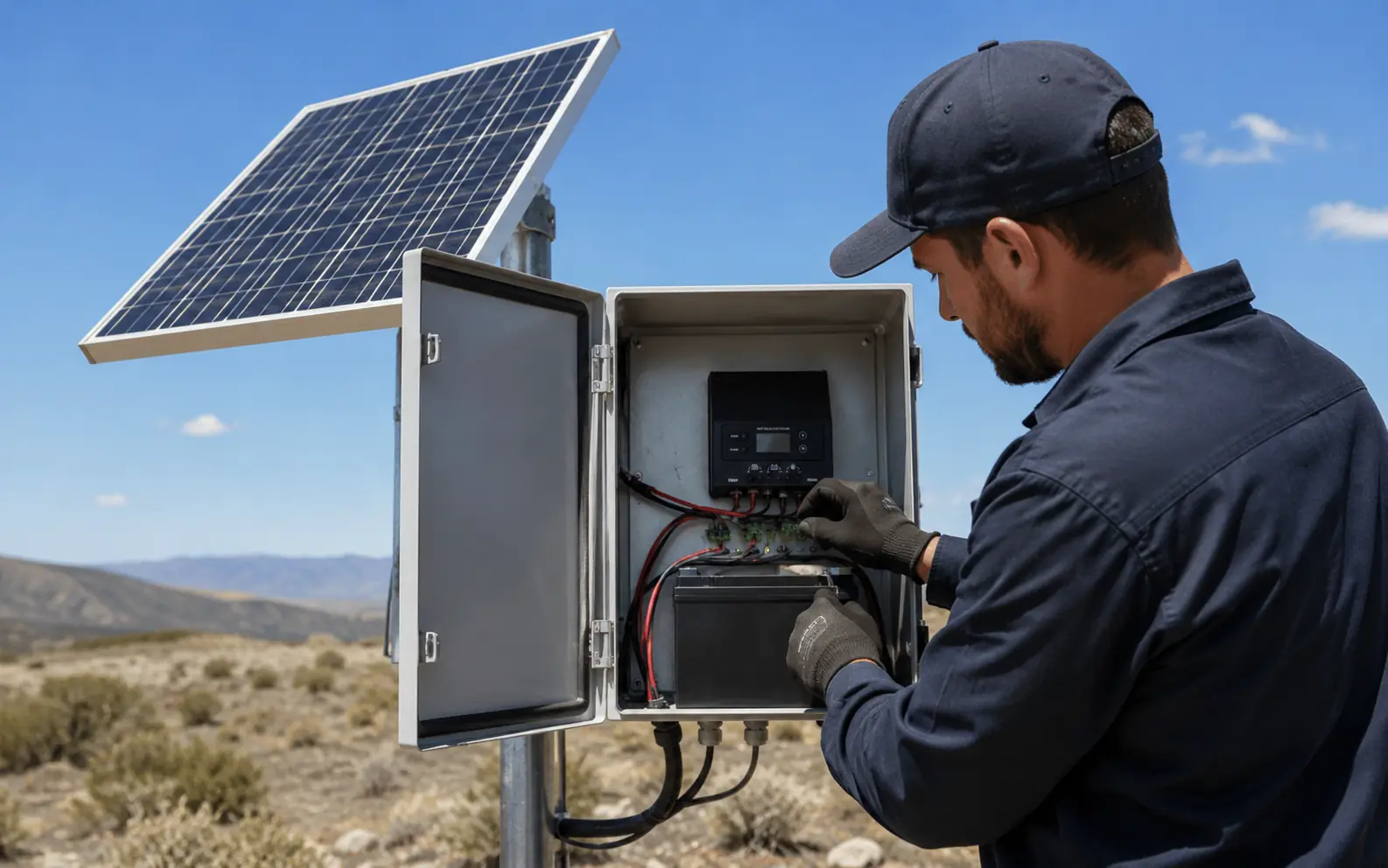



Pairing solar panels with battery storage is one of the most important decisions in designing a reliable off-grid or backup power system. A mismatched system can result in slow battery recovery, reduced runtime, shortened battery life, and unnecessary downtime. Proper sizing starts with the equipment load, available sunlight, battery capacity, desired autonomy, system voltage, and charge-controller configuration.
For applications that need a complete system rather than individual components, Tycon Systems® offers RemotePro® off-grid solar power systems for locations without dependable utility power and UPSPro® outdoor UPS and battery backup systems for equipment that must continue operating during power interruptions or unstable utility conditions.
Understanding Solar Panel and Battery Compatibility
Solar panels, batteries, charge controllers, and connected loads must work together as one electrical system. Matching components requires more than choosing similar voltage labels. The complete design should account for operating voltage, charging current, battery capacity, environmental conditions, and the amount of energy the load consumes each day.
- Voltage Requirements: Solar arrays, batteries, charge controllers, and connected equipment must operate within compatible voltage ranges. A 12V system, for example, has different charging and battery requirements than a 24V or 48V system.
- Battery Capacity: Battery capacity, typically expressed in amp-hours (Ah) or watt-hours (Wh), determines how long the load can operate when solar production is low or unavailable. The battery bank must provide adequate usable energy without routinely exceeding the recommended depth of discharge.
- Charge Controller Integration: The solar charge controller manages energy between the solar array and battery bank. Selecting the correct PWM or MPPT controller is essential for proper battery charging, voltage compatibility, and long-term system performance.
Steps to Match Solar Panels With Battery Storage
1. Determine Your Energy Needs
Start by calculating the daily energy consumption of every device the solar system must support. Depending on the application, this may include industrial equipment, IoT sensors, security cameras, wireless radios, cellular equipment, lighting, monitoring devices, controllers, or backup loads.
Continuous load is especially important in remote installations. A device drawing only a few watts can consume a significant amount of energy when it operates 24 hours per day. Converting the complete load into daily watt-hours provides the starting point for both battery and solar-array sizing.
2. Choose the Right Battery Chemistry
Common battery options for off-grid and backup systems include:
- Sealed Lead-Acid: A proven and cost-effective choice for many stationary systems. Lead-acid batteries require appropriate depth-of-discharge limits and should be sized with temperature and expected cycle life in mind.
- Lithium / LiFePO4: Typically lighter and capable of greater usable depth of discharge and longer cycle life, depending on battery design, operating temperature, charging parameters, and application.
Browse Tycon Solar® batteries for battery options designed for remote solar and backup power applications.
3. Size the Battery Bank
Battery sizing depends on several factors:
- Total daily energy consumption
- Desired days of autonomy during cloudy weather or outages
- Recommended depth of discharge for the battery chemistry
- Battery efficiency and other system losses
- Temperature and environmental conditions at the installation site
For example, a system consuming 5kWh per day and requiring two days of autonomy needs at least 10kWh of usable stored energy. The actual nominal battery capacity may need to be larger after accounting for allowable depth of discharge, temperature, aging, and system losses.
4. Size the Solar Array
The solar array must generate enough energy during available sunlight to operate the load and restore energy used from the battery bank. Important considerations include:
- Peak Sun Hours (PSH) at the installation location
- Seasonal changes in solar production
- Panel orientation and mounting angle
- Temperature, wiring, controller, and conversion losses
- Required recharge time after periods of reduced sunlight
Tycon Solar® offers solar panels in multiple voltage and wattage configurations for remote and backup power installations.
Ready to Estimate Your System Requirements?
Once you know the equipment load, operating time, available sunlight, and desired battery reserve, use the Tycon Systems® calculators to help estimate the power requirements for your application.
Use the Power & Solar Calculators →5. Select the Charge Controller
Once the solar array and battery bank are selected, verify that the charge controller supports the required system voltage, maximum solar input, battery chemistry, and charging current.
PWM controllers can be a practical choice for straightforward systems, while MPPT controllers can provide additional flexibility and improve solar-energy utilization in many larger or more demanding installations. Browse Tycon Solar® charge controllers to compare available PWM and MPPT options.
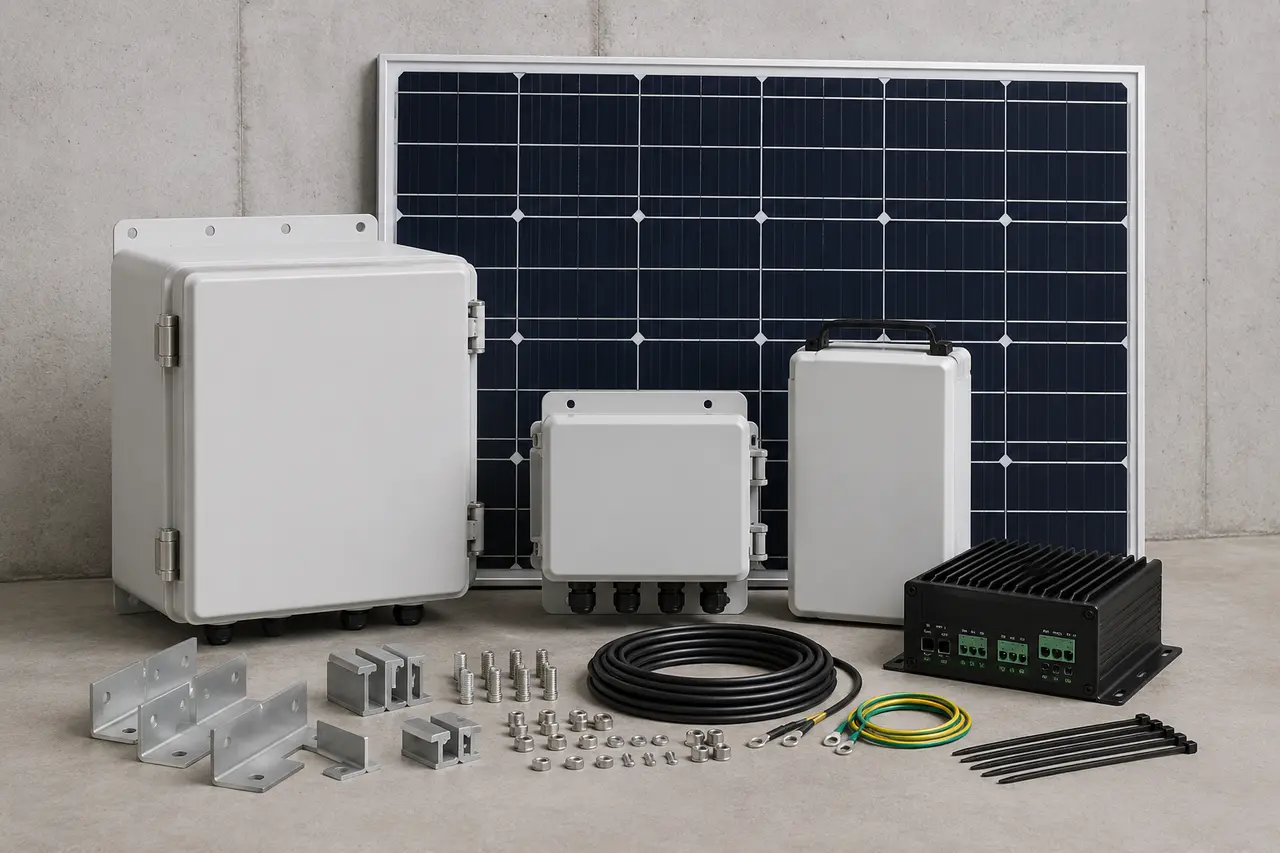
Energy Management and Remote Monitoring
Charge control, load management, and system monitoring can improve reliability and help protect batteries in remote installations. The exact capabilities depend on the controller and system configuration, but useful functions can include:
- Battery Protection: Proper charge and load control can help prevent damaging overcharge and excessive battery discharge.
- System Status: Available controller displays and monitoring options can provide useful information about battery voltage, charging, load status, and overall system operation.
- Remote Monitoring: For compatible RemotePro® configurations, remote monitoring options can reduce unnecessary field visits by providing visibility into system conditions from another location.
Common Solar and Battery Applications
Industrial Monitoring
Solar-powered sensors and monitoring equipment at remote plants, utility sites, infrastructure, and industrial facilities depend on properly sized batteries to maintain continuous operation when solar production is reduced.
Agriculture and Environmental Sensors
Irrigation controls, soil sensors, weather stations, environmental monitoring equipment, and remote communications systems often use off-grid solar with battery storage to operate consistently in locations where utility power is unavailable.
Security and Wireless Equipment
Security cameras, wireless access points, radios, cellular routers, and other network equipment are common remote loads. Because these devices may need to run continuously, the solar array and battery bank should be sized around 24-hour energy consumption rather than only the equipment's instantaneous wattage.
Residential and Remote Property Systems
The same sizing principles also apply to remote cabins, residences, and other properties using solar-battery systems for lighting, refrigeration, communications, and backup power. Correctly matching the load, battery storage, and solar generation improves runtime and helps avoid unnecessary battery cycling.
Designing for Reliable Off-Grid Operation
A reliable off-grid solar system involves more than matching nameplate wattage. The complete design should consider seasonal solar conditions, battery autonomy, equipment startup loads, enclosure environment, cable losses, mounting, charge control, and future changes to the load.
Which Tycon® System Fits the Application?
RemotePro® Off-Grid Solar Power Systems
RemotePro® combines solar generation, battery storage, charge control, outdoor enclosures, and mounting into configurations designed for remote equipment such as surveillance cameras, wireless networks, communications equipment, sensors, and monitoring devices.
Explore RemotePro® →UPSPro® Outdoor UPS & Battery Backup Systems
UPSPro® provides battery-backed outdoor power for network, security, communications, and other critical field equipment that needs to remain operating when primary power is interrupted.
Explore UPSPro® →Future Trends in Solar and Battery Systems
- Integrated Solar-Battery Systems: Pre-configured platforms simplify deployment for industrial IoT, environmental monitoring, surveillance, communications, and other remote infrastructure.
- Smarter Monitoring and Control: Improved controllers and remote monitoring tools can provide greater visibility into battery condition, charging performance, and field-system operation.
- More Battery Choices: System designers increasingly have access to both lead-acid and lithium options. Different battery chemistries should not be mixed within the same battery bank unless the system is specifically engineered and approved for that configuration.
Solar Panel and Battery Sizing FAQs
How do I know if my solar panels match my battery bank?
Check system voltage, battery charging requirements, solar-array output, and charge-controller ratings. The solar array, battery, controller, and load should all operate within compatible electrical limits.
Can I use different battery chemistries in the same battery bank?
In most applications, batteries with different chemistries, capacities, ages, or charging requirements should not be mixed in the same bank. Use batteries designed to operate together and follow the battery and charge-controller manufacturer's requirements.
What role do charge control and monitoring play?
A properly selected charge controller manages solar charging and helps protect the battery bank. Depending on the system, additional monitoring can provide useful information about battery voltage, charging status, loads, and system operation.
What size solar array do I need for my batteries?
Start with daily energy consumption, then account for Peak Sun Hours, seasonal conditions, system losses, battery recharge requirements, and the desired amount of autonomy.
When should I use a complete off-grid solar power system?
A complete system is useful when equipment must operate at a remote site without dependable utility power and you want the solar array, battery storage, charge control, enclosure, and mounting designed as an integrated solution.