
Remote cameras, wireless networks, industrial monitoring equipment, sensors, communications systems, and other field infrastructure often need dependable power in places where extending utility service is difficult or impractical. For many of these applications, off-grid solar power provides a practical way to generate energy directly at the site and store it for operation after sunset or during periods of reduced sunlight.
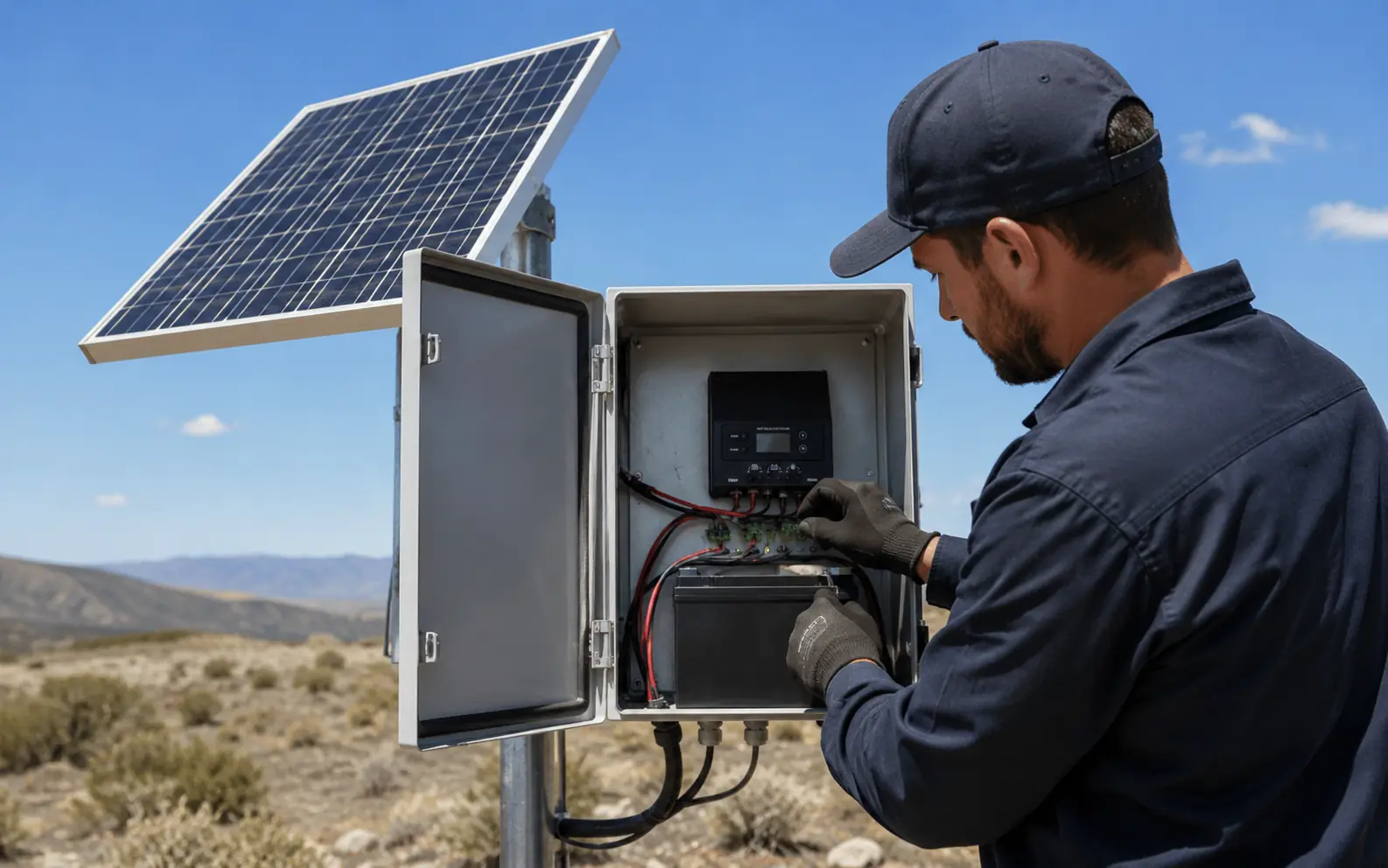
Modern systems combine solar panels, battery storage, charge control, outdoor enclosures, mounting, and power-management equipment into complete remote-power platforms. Properly sizing those components around the actual load, location, required runtime, and environmental conditions is what turns individual components into a reliable off-grid power system.
Why Remote Infrastructure Needs a Different Approach to Power
Conventional infrastructure usually assumes that utility power is already available. Remote installations often do not have that advantage. A site may be miles from the nearest electrical service, located on private or public land where trenching is difficult, or deployed temporarily where a permanent grid connection makes little sense.
Generators can provide power in some locations, but they also introduce fuel delivery, mechanical maintenance, noise, and regular site-service requirements. Those disadvantages become more significant as equipment is installed farther from technicians and supply routes.
Solar power changes the design approach by allowing energy to be generated at the deployment site. Battery storage then supports the equipment when solar production is unavailable or insufficient. The result can be a self-contained power system designed specifically around the field equipment it needs to operate.
Core Components of an Off-Grid Solar Power System
Reliable off-grid operation depends on matching several components rather than simply installing a solar panel large enough to power the equipment during daylight.
Solar Panels
The solar array must generate enough energy to operate the load while also restoring energy used from the battery bank. Panel wattage should be selected using the site's available sunlight, seasonal conditions, daily equipment energy consumption, system losses, and required battery-recovery time.
Tycon Solar® offers solar panels for remote power systems in multiple wattage and voltage configurations.
Battery Storage
Batteries allow equipment to continue operating at night and through periods of low solar production. Capacity should be based on the daily load, required autonomy, allowable depth of discharge, battery chemistry, expected temperature, aging, and other system losses.
Browse Tycon Solar® batteries for remote solar and backup-power applications.
Solar Charge Controllers
The charge controller regulates energy moving from the solar array into the battery bank. Controller selection should account for battery chemistry, system voltage, solar-array input, charging current, and the electrical requirements of the complete system.
MPPT controllers provide additional flexibility in many remote-power applications by converting available solar energy into an appropriate battery-charging profile. Tycon Solar® offers PWM and MPPT solar charge controllers for a range of system configurations.
Start With the Load, Location, and Required Runtime
The right solar and battery capacity depends on what the site needs to power, how many hours per day the equipment operates, available sunlight, and the amount of battery reserve required. Tycon Systems® provides power and solar calculators to help with the initial sizing process.
Use the Power & Solar Calculators →Where Off-Grid Solar Power Is Being Used
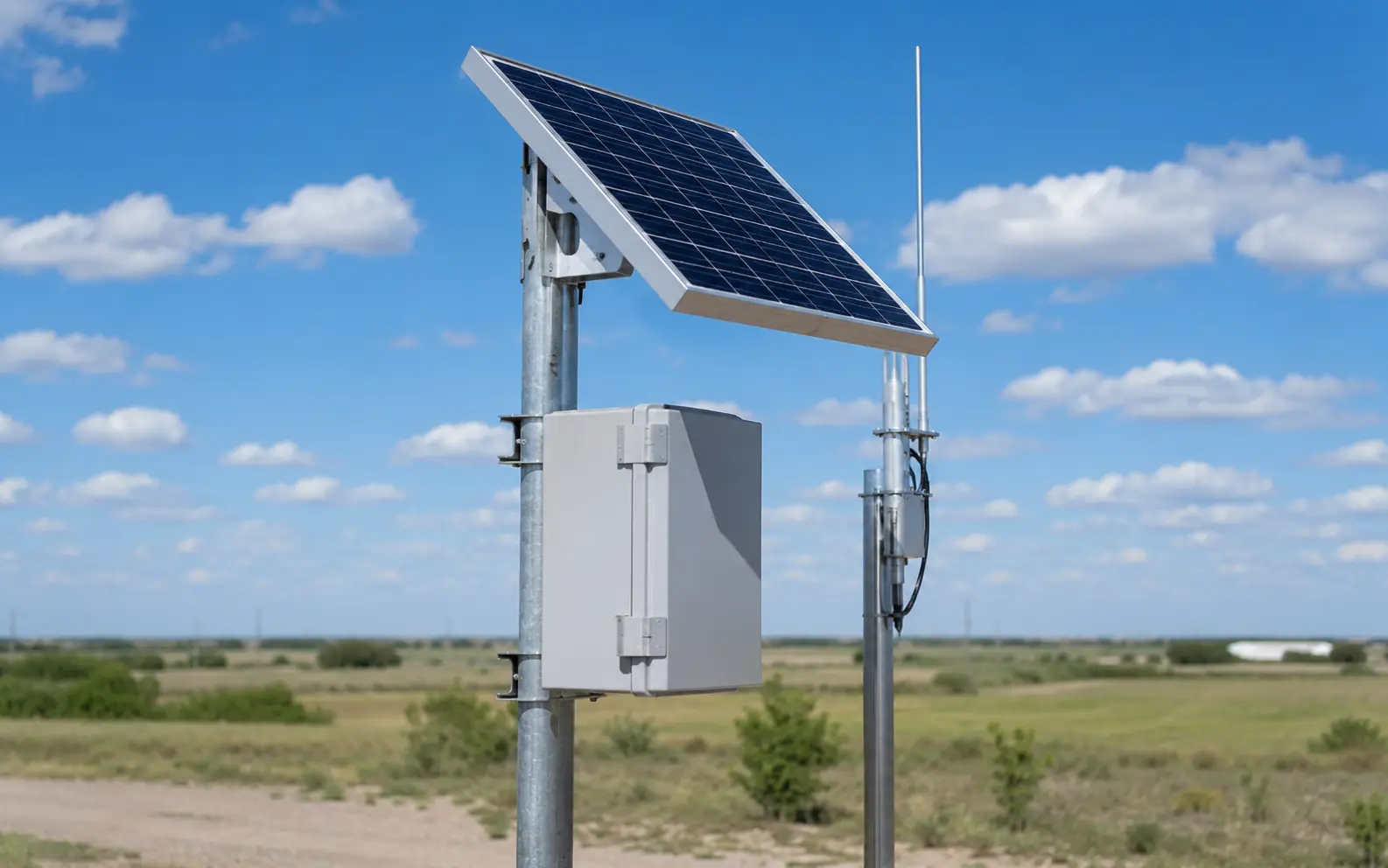
The same basic remote-power architecture can support many different types of field equipment. What changes from one application to another is the electrical load, required autonomy, mounting method, environmental exposure, and communication equipment connected to the system.
Telecom and Wireless Networks
Wireless access points, radios, repeaters, cellular routers, microwave equipment, and other communications devices are frequently installed in elevated or remote locations. Solar power can eliminate the need to extend electrical service solely for the communications equipment.
Industrial IoT and Remote Monitoring
Environmental sensors, telemetry equipment, SCADA devices, weather stations, pipeline monitoring systems, water infrastructure, and industrial IoT equipment may operate in locations where routine site access is difficult. A properly sized solar and battery system allows the monitoring equipment to operate independently from utility power.
Security and Surveillance
Cameras, wireless bridges, cellular gateways, network switches, and related security equipment can be deployed at gates, construction areas, utility sites, agricultural properties, parking areas, and other locations where trenching power and network cabling would be difficult or expensive.
Utilities and Field Infrastructure
Remote electrical, water, transportation, and monitoring infrastructure often needs low-voltage power for sensors, communications, controls, and telemetry. Solar generation and battery storage can provide local power while reducing dependence on a distant electrical connection.
Complete Remote Solar Systems vs. Individual Components
Individual panels, batteries, and charge controllers are useful when an engineer or installer already knows the required configuration. Other projects benefit from a more integrated system where the major power components are designed to work together.
RemotePro® off-grid solar power systems combine solar generation, battery storage, charge control, outdoor enclosures, and mounting into configurations designed for remote cameras, communications equipment, sensors, wireless networks, and other field electronics.
No Dependable Utility Power at the Site?
RemotePro® is the primary Tycon Solar® platform for equipment that needs a complete off-grid solar and battery power system.
Explore RemotePro® Off-Grid Solar Power Systems →What if Utility Power Is Available but Unreliable?
Not every remote-infrastructure problem requires a fully off-grid solar system. Some sites already have utility, AC, or another primary power source but need equipment to remain operating through outages or unstable power conditions.
For those applications, UPSPro® outdoor UPS and battery backup systems provide a different approach by maintaining battery-backed power for network, communications, security, and other critical field equipment.
Solar Power vs. Generator-Based Remote Power
Solar and generator systems solve the same basic problem in different ways. A generator produces power from fuel and mechanical equipment. A solar-battery system generates energy during available sunlight and stores that energy for later use.
Important factors to compare include:
- Fuel delivery and storage requirements
- Routine mechanical maintenance
- Expected daily and seasonal energy demand
- Available sunlight at the installation site
- Battery autonomy requirements
- Noise and site-access considerations
- Initial installation cost and long-term service requirements
The best approach depends on the equipment load, site conditions, access, operating requirements, and the consequences of downtime. In some projects, solar can operate as the primary power source. Other sites may use a hybrid configuration where another source provides additional charging or backup capability.
Designing Off-Grid Power for Reliability
Reliable remote power starts with the actual application rather than the solar-panel wattage alone. A complete design should consider:
- Equipment Load: Operating watts, startup requirements, and hours of operation per day.
- Solar Resource: Peak Sun Hours and seasonal variation at the deployment location.
- Battery Autonomy: How long the system needs to operate without meaningful solar production.
- Temperature: Battery and electronics performance can change significantly in hot or cold environments.
- Mounting: Pole, ground, wall, enclosure, and solar-panel mounting requirements.
- Electrical Losses: Cable length, power conversion, charging, and other system losses.
- Future Expansion: Additional cameras, radios, sensors, or other loads that may be added later.
Remote Monitoring and Power Management
Remote sites are more useful when technicians can understand system conditions without making an unnecessary trip to the installation. Depending on the system and controller configuration, monitoring can provide visibility into battery voltage, charging conditions, equipment status, and other operating information.
Monitoring does not replace proper system sizing, but it can make a remote installation easier to maintain by helping operators identify changing conditions before dispatching personnel to the site.
The Future of Off-Grid Solar Infrastructure
Remote infrastructure continues to become more distributed as cameras, sensors, industrial IoT devices, wireless networks, and monitoring equipment are deployed farther from conventional facilities. That increases the need for power systems that can operate independently at the point of use.
Areas of continued development include:
- Higher-capacity battery options
- More capable solar charge controllers
- Remote monitoring and control
- More modular and preconfigured power systems
- Solar, battery, wind, utility, and other hybrid charging configurations
For system designers, the important trend is not simply greater solar-panel efficiency. It is the continued integration of generation, storage, control, monitoring, enclosure design, and mounting into power platforms that are easier to deploy and maintain in the field.
Off-Grid Solar Power FAQs
Can solar power remote cameras and wireless equipment?
Yes. Cameras, wireless radios, cellular routers, sensors, access points, and similar electronics are common off-grid solar loads. The system must be sized around the equipment's total daily energy consumption and the solar conditions at the site.
How do I size solar power for a remote site?
Start with the equipment load and hours of operation per day. Then account for available Peak Sun Hours, desired battery autonomy, system losses, temperature, and seasonal solar conditions.
Can off-grid solar work in cloudy or cold locations?
Yes, but the system must be designed for the local conditions. Reduced seasonal sunlight, prolonged cloudy periods, snow, temperature, battery performance, and panel placement should all be considered when determining solar and battery capacity.
Should I build a solar system from components or use a complete system?
Individual components work well when the required electrical design is already defined. A complete system can simplify projects where solar generation, batteries, charge control, enclosure, and mounting need to be selected as an integrated package.
What is the difference between RemotePro® and UPSPro®?
RemotePro® is designed primarily for off-grid locations that need solar-generated power. UPSPro® is designed for equipment that already has a primary power source but needs battery backup when that source is interrupted.