



Earth Day 2026: How Solar and Renewable Energy Drive Sustainability
Earth Day 2026: How Solar and Renewable Energy Drive Sustainability
Earth Day is an opportunity to look beyond broad sustainability goals and consider how energy is actually generated, stored, delivered, and used in real-world infrastructure. For remote cameras, wireless equipment, environmental sensors, telemetry, industrial monitoring, and other field electronics, the power architecture itself can have a meaningful effect on how a site is deployed and maintained.
Solar power is particularly useful where extending utility service would require long cable runs, trenching, additional infrastructure, or where equipment would otherwise depend on generator operation or repeated battery replacement. When solar generation, battery storage, efficient electronics, and appropriate system sizing are combined, remote infrastructure can often operate with less dependence on traditional site power.
Sustainability Starts With the Actual Application
Installing a solar panel does not automatically make an infrastructure project efficient or sustainable. A well-designed system starts by understanding what equipment needs to operate and how much energy it actually consumes.
Important questions include:
- What equipment needs power?
- How many watt-hours does it use each day?
- Is the load continuous or intermittent?
- How much sunlight is available at the site?
- How much battery autonomy is required?
- What temperatures and environmental conditions will the system experience?
- How difficult will the site be to access and maintain?
Answering those questions helps prevent both undersizing and unnecessary oversizing. Efficient system design is one of the simplest ways to reduce material, battery, solar-panel, and maintenance requirements.
Use the Right Amount of Energy and Hardware for the Job
Sustainability is not only about where energy comes from. Equipment efficiency, correct system sizing, service life, battery replacement, transportation, maintenance visits, and the amount of infrastructure required at the site can all affect the overall project.
Solar Power Can Reduce Dependence on Remote Utility Extensions
Providing utility power to remote field equipment may require trenching, poles, conduit, long cable runs, electrical service equipment, permitting, and other site work.
For relatively low-power electronics, generating electricity directly at the equipment can sometimes provide a much simpler alternative.
Remote cameras, wireless radios, cellular gateways, sensors, controllers, telemetry equipment, and monitoring systems are particularly well suited to evaluating this approach because many of these devices have modest but continuous power requirements.
Solar Can Also Reduce Dependence on Generator Fuel
Generators remain useful where large loads, extended poor solar conditions, emergency operation, or other site requirements make them appropriate.
However, generator-powered remote sites can also require fuel transportation, periodic refueling, engine maintenance, oil and filter service, and mechanical repairs.
Where the equipment load and solar resource are suitable, solar generation with battery storage can reduce or eliminate routine generator operation. Hybrid designs can also combine solar with another charging source when relying exclusively on solar would require impractical amounts of storage or panel capacity.
Battery Storage Makes Solar Useful After Sunset
Many remote systems need power 24 hours per day even though solar generation is available only during daylight. Battery storage bridges that gap.
Battery capacity should be selected around daily equipment energy use, required autonomy, battery chemistry, allowable depth of discharge, temperature, system losses, and expected aging.
Browse Tycon Solar® batteries for off-grid solar and backup-power applications.
Remote Solar Power in Real Infrastructure
The sustainability benefit of distributed solar becomes easier to understand when looking at an actual field installation. Instead of transporting energy continuously to a remote site, the system generates energy beside the equipment and stores it locally.
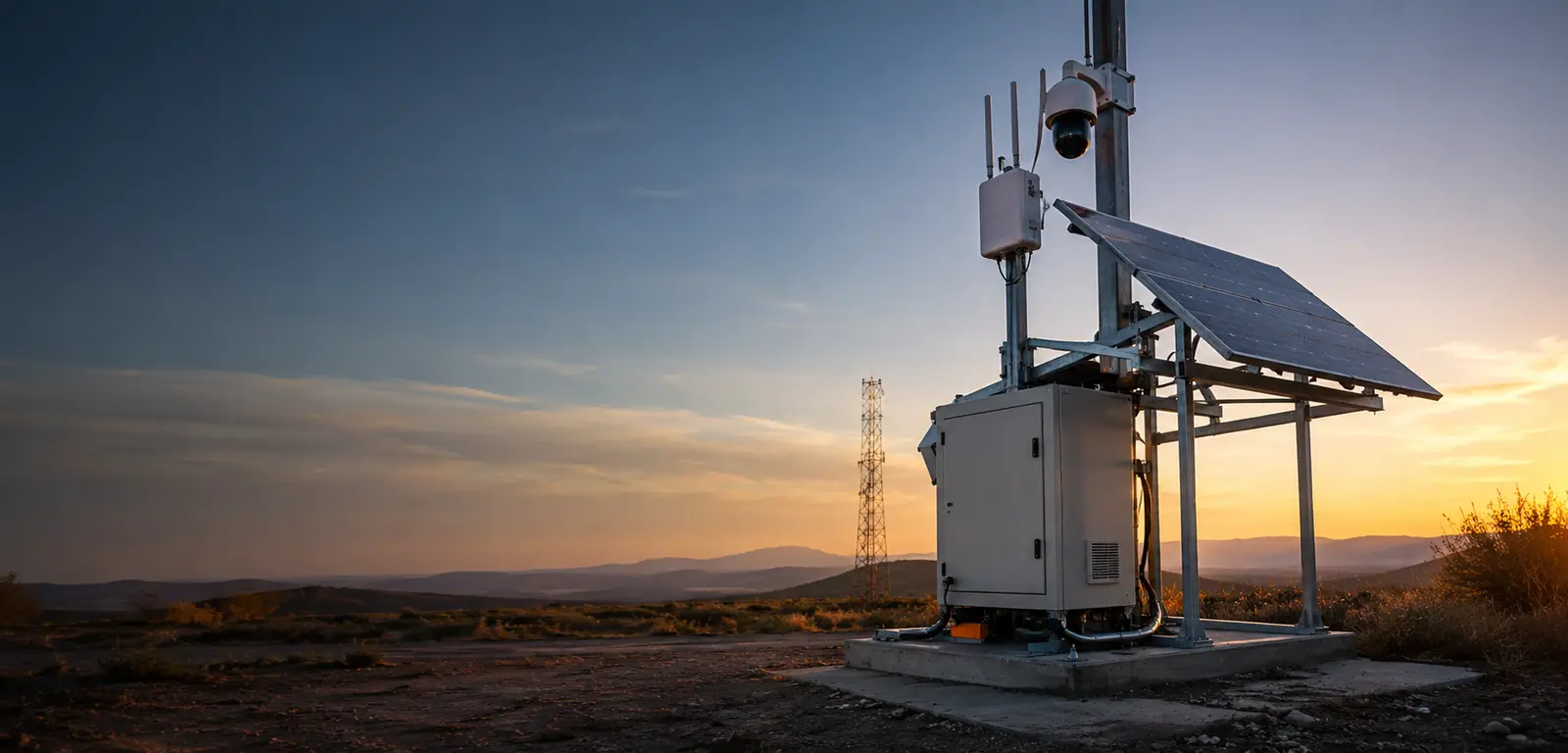
This approach is particularly useful where extending infrastructure would be difficult, where the equipment is geographically distributed, or where a project needs to be installed independently of an existing electrical grid.
RemotePro® for Sites Without Dependable Utility Power
RemotePro® is Tycon Solar®'s family of complete off-grid solar power systems. It should not be confused with a remote-monitoring platform.
RemotePro® systems combine solar generation, battery storage, charge control, outdoor enclosure protection, mounting, and related power hardware for cameras, wireless systems, sensors, telemetry, communications, and other field electronics.
Explore RemotePro® off-grid solar power systems when the site needs a primary power source rather than simply battery backup.
UPSPro® for Sites That Already Have Primary Power
Some remote infrastructure already has AC, DC, or PoE power but needs equipment to remain online through interruptions. That is a different problem from creating primary off-grid power.
UPSPro® outdoor UPS and battery backup systems are designed for applications where a normal power source exists but cameras, radios, communications equipment, sensors, or other field devices require battery-backed operation during outages.
Monitoring Can Reduce Unnecessary Site Visits
A remote system may be physically reliable but still expensive to maintain if technicians need to travel to the site simply to determine what is happening.
Depending on the system, remote monitoring can provide information such as:
- Battery voltage
- Charge and discharge current
- Solar charging information
- Temperature
- Equipment status
- Relay state
- Historical operating information
Tycon® TPDIN® monitoring and control products provide options for monitoring and controlling remote power and equipment installations.
Sustainability Includes How a Remote Site Is Maintained
A remote monitoring system that helps identify battery, charging, temperature, or equipment problems before a technician is dispatched can reduce unnecessary troubleshooting trips. The actual benefit varies by site, but service logistics are worth considering alongside energy generation.
Environmental Monitoring
Environmental research often requires sensors and communications equipment in locations where adding permanent electrical infrastructure would be undesirable or impractical.
Solar can support weather stations, water monitoring, wildlife research, air-quality sensors, telemetry, data loggers, and other equipment while allowing monitoring to take place close to the resource or environment being studied.
Agriculture and Smart Farming
Large agricultural properties may need sensors, cameras, weather stations, irrigation controls, wireless links, and communications equipment spread across significant distances.
Local solar generation can support selected field electronics without extending power infrastructure to every monitoring point. Efficient sensors and communications equipment can further reduce the amount of solar and battery capacity required.
Industrial and Utility Monitoring
Utilities and industrial operators increasingly deploy monitoring, telemetry, communications, and security equipment across geographically distributed assets.
Solar power can support selected low-voltage field equipment at pipelines, tanks, water infrastructure, telecommunications sites, transportation assets, industrial yards, and other locations where utility power is difficult to provide.
Remote Security and Surveillance
Cameras are increasingly installed at construction sites, gates, utility infrastructure, agricultural properties, transportation corridors, and temporary locations.
When the complete camera, communications, PoE, and networking load is correctly sized, solar and battery power can allow surveillance equipment to operate without waiting for permanent electrical service.
Efficiency Comes Before Adding More Solar
One of the most useful ways to improve an off-grid system is often to reduce unnecessary energy consumption before increasing panel or battery capacity.
Opportunities can include:
- Selecting lower-power field electronics where appropriate
- Using efficient DC-to-DC conversion
- Turning noncritical loads off when they are not needed
- Using sleep modes or scheduled communications
- Reducing unnecessary cable losses
- Separating critical and noncritical loads
Every watt removed from a continuous load can reduce both daily energy consumption and the amount of solar generation and battery storage required to support it.
System Longevity Is Part of Sustainability
A system that operates reliably for a long period can avoid unnecessary component replacement, emergency service, and repeated site work.
Long-term reliability depends on factors such as:
- Correct solar and battery sizing
- Appropriate battery chemistry
- Correct charging parameters
- Outdoor enclosure protection
- Quality mounting and wiring
- Temperature management
- Routine inspection and maintenance
Calculate the System Before Selecting the Hardware
Start with the equipment wattage, daily operating time, location, available sunlight, required battery autonomy, and environmental conditions. Correct sizing can prevent unnecessary hardware while still providing the energy reserve the application requires.
Use the Power & Solar Calculators →Solar Power and Sustainability FAQs
Is solar power completely impact-free?
No energy system is impact-free. Solar panels, batteries, electronics, mounting hardware, manufacturing, transportation, installation, and eventual replacement all have environmental impacts. The appropriate comparison is usually between complete system alternatives over the expected life of the project.
Can solar reduce generator use at remote sites?
Yes, in applications where solar generation and battery storage can support the equipment load. Some projects can operate primarily from solar, while others may benefit from a hybrid system that retains another charging source.
Does solar always reduce project cost?
Not automatically. Economics depend on equipment load, installation cost, available sunlight, battery replacement, utility-extension cost, generator fuel and maintenance, service access, incentives, and the expected life of the system.
What is the difference between RemotePro® and UPSPro®?
RemotePro® is designed for sites that need primary off-grid solar power. UPSPro® is designed for sites that already have a primary AC, DC, or PoE power source but require outdoor battery backup.
Can remote monitoring improve sustainability?
It can help by providing information that may prevent unnecessary service visits or allow developing problems to be identified earlier. The actual benefit depends on the site's distance, service requirements, and monitoring architecture.
What is the best first step when considering remote solar power?
Define the complete equipment load, daily energy requirement, operating voltage, installation location, desired battery autonomy, and environmental conditions before selecting panels, batteries, or controllers.
Start With the Site and Build From There
Tycon Systems® can help match equipment load, solar generation, battery storage, charge control, monitoring, mounting, and environmental requirements to a remote power deployment.
Request a System Design → Explore Tycon Solar®