

Global Energy Independence Day 2026 | Remote Power | Tycon®
Global Energy Independence Day, observed on July 10, is an opportunity to think about where energy comes from, how dependable it is, and what happens when conventional infrastructure is unavailable.
For remote infrastructure, energy independence has a very practical meaning. A security camera may be miles from utility service. A wireless network may cross a location where electrical trenching is impractical. A sensor may need to operate unattended through nights, storms, outages, and changing seasons.
Solar generation, battery storage, charge control, backup power and remote monitoring can help solve those problems—but true reliability comes from designing the complete power system around the equipment, location and required runtime.
What Does Energy Independence Mean for a Remote Site?
At a national level, energy independence can involve questions of domestic production, imported fuels, grid infrastructure and energy policy.
At a remote equipment site, the question is much more specific:
Can this equipment receive the energy it needs, for as long as it needs it, without depending on a utility connection at the installation point?
For cameras, wireless radios, sensors, routers, telemetry and other field electronics, the answer can sometimes be a properly sized solar and battery system.
Off-Grid Power and Backup Power Are Not the Same Thing
If no dependable primary power source exists, the site needs an energy source. If primary power already exists but outages are the concern, the site needs backup. Those two problems lead to different system architectures.
Three Different Paths to Remote Power Reliability
1. No Utility Power: RemotePro®
When a fixed site has no dependable utility connection, RemotePro® off-grid solar power systems provide solar generation, battery storage, charge control and weather-resistant field hardware for compatible remote equipment.
2. Primary Power Exists: UPSPro®
When AC, DC or PoE power is normally available but equipment needs to remain online through an interruption, UPSPro® outdoor UPS systems provide battery backup for cameras, communications equipment, wireless networks and other compatible field electronics.
3. The Site Needs to Move: MobileSolarPro®
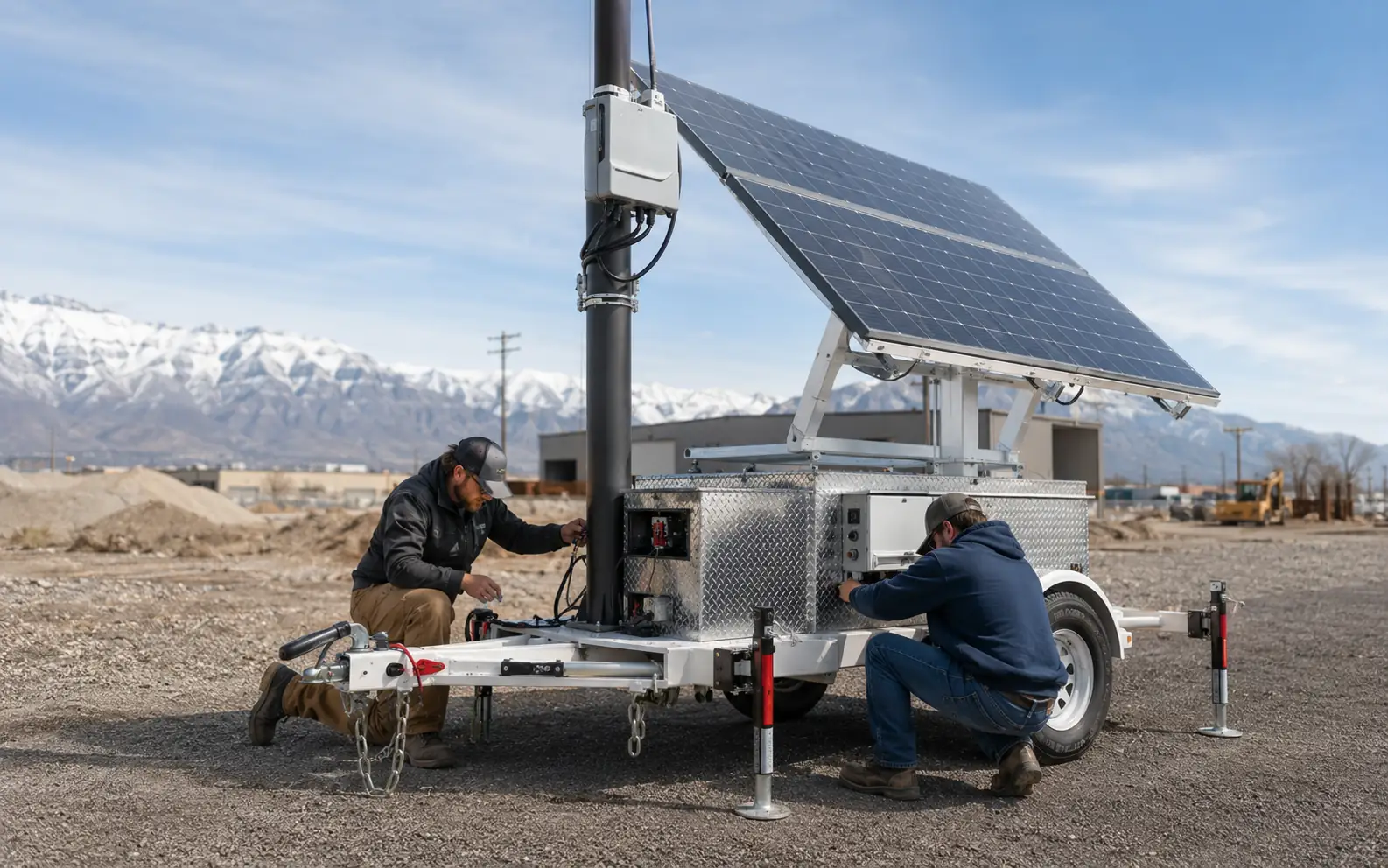
When the power system needs to move with surveillance, communications, monitoring or temporary infrastructure, MobileSolarPro® trailers and skids provide transportable solar and battery platforms.
Energy Independence Starts With the Load
A solar panel does not make a site energy independent by itself.
First determine what the site needs to power.
A typical remote installation might include:
- Security cameras
- Wireless access points
- Point-to-point radios
- Cellular routers
- PoE switches and injectors
- Environmental or industrial sensors
- Telemetry equipment
- Monitoring hardware
- Other DC-powered field electronics
Every device contributes to the energy requirement. Ignoring the router, radio, switch or heater because the camera is considered the “main load” can lead to an undersized system.
Power Is Measured in Watts. Independence Depends on Watt-Hours.
Knowing equipment wattage tells you its instantaneous power requirement. Off-grid design also requires knowing how long the equipment runs.
Equipment Watts × Operating Hours = Watt-Hours of Energy
For example, a 20W device operating continuously consumes approximately 480Wh per day before accounting for conversion and system losses.
Add every powered device together and the result becomes the starting point for battery and solar sizing.
Battery Storage Provides Independence When the Sun Is Not Available
Solar production changes throughout the day and stops after sunset, while many remote systems operate continuously.
Battery storage allows the equipment load and solar generation to operate on different schedules.
Battery sizing should consider:
- Daily equipment energy consumption
- Desired hours or days of autonomy
- Battery chemistry
- Allowable depth of discharge
- Temperature
- Battery aging
- System losses and required reserve
More battery capacity can provide longer autonomy, but it also needs enough charging energy to recover after discharge.
Solar Generation Has to Replenish What the Load Consumes
The array needs to produce enough useful energy to support the load and restore energy removed from the battery.
Solar sizing should account for:
- Installation location
- Seasonal peak-sun-hours
- Panel orientation and tilt
- Shading
- Temperature
- Controller and wiring losses
- Required battery recovery
A year-round system should generally be evaluated around the season that creates the most difficult energy balance rather than the month with the best solar production.
Energy Independence Is a Complete-System Problem
Reliable field power comes from coordinating solar generation, batteries, charge control, wiring, protection, mounting, communications and the equipment load.
Charge Controllers Manage the Energy Flow
A solar charge controller regulates energy from the PV array into the battery system.
Depending on the controller, it may also provide load control, low-voltage disconnect, programmable charging profiles, communications and operating information.
Tycon Solar® offers MPPT and PWM solar charge controllers for different PV, battery and remote-power architectures.
“Off-Grid” Does Not Automatically Mean Reliable
A system can be completely disconnected from utility power and still fail if the solar array, battery bank, charge controller or equipment load is incorrectly sized. Energy independence depends on maintaining the energy balance under real site conditions.
Hybrid Power Can Improve Resilience
Complete energy independence does not always require relying on one energy source.
Some remote sites benefit from combining solar and battery storage with another charging source, particularly when weather, seasonal solar conditions or uptime requirements make additional redundancy valuable.
Depending on the application, that secondary source might be AC charging, generator charging or wind energy.
Tycon Solar® includes BreezePro® wind-power options for sites where wind can provide an additional charging source alongside solar. A hybrid system should still be sized around the actual load and expected contribution of each energy source.
Backup Power Is Also Part of Energy Resilience
Energy independence and energy resilience are related, but they are not identical.
A site connected to the utility may have no reason to disconnect from it. The more useful objective may simply be to ensure that critical equipment continues operating when utility power fails.
That is where UPSPro® belongs. It provides outdoor battery backup rather than acting as the solar battery-management component inside RemotePro®.
Monitor the System Instead of Assuming It Is Healthy
A self-powered remote site is most useful when operators can understand what is happening without immediately traveling to the installation.
Useful measurements can include:
- Battery voltage
- Charge and discharge current
- Solar input
- Equipment load
- Temperature
- Equipment or relay status
RemotePro® itself should not be described as the monitoring platform.
Tycon® TPDIN® monitoring and control products can provide voltage, current, temperature, relay control, alerts and other system information in compatible installations. TPDIN-Monitor-WEB3 can also interface with supported Tycon MPPT solar controllers.
Where Site-Level Energy Independence Makes Sense
Security and Surveillance
Cameras can be positioned at gates, transportation corridors, construction areas, industrial sites and remote properties without requiring utility service at every monitoring point.
Wireless Communications
Radios, access points, wireless bridges and cellular routers can operate at remote communication sites when solar and battery capacity support their continuous load.
Industrial Monitoring
Sensors, telemetry, gateways and monitoring hardware can be installed closer to the equipment or environment being measured instead of only where grid power is convenient.
Utility and Municipal Infrastructure
Water systems, transportation equipment, remote facilities and other distributed infrastructure may require low-voltage power beyond the practical reach of conventional service.
Temporary Sites
Construction, temporary surveillance, emergency response and communications projects can use mobile solar platforms where the power source needs to move with the equipment.
What Energy Independence Does Not Mean
It is useful to separate several concepts that are sometimes grouped together.
A remote solar system does not automatically guarantee:
- Zero downtime
- A fixed percentage of cost savings
- A fixed carbon reduction
- No future maintenance
- Unlimited battery runtime
- Freedom from seasonal or weather-related design constraints
Those outcomes depend on the application, equipment, solar resource, batteries, maintenance strategy and what conventional energy source the solar system is replacing.
Cost Savings Are Site-Specific Too
Off-grid solar can sometimes avoid trenching, utility extensions, recurring generator fuel, service trips or other costs associated with powering remote equipment.
At another site, the economics may be very different.
Instead of assuming one universal ROI, compare the total installed and operating costs of each practical power architecture over the expected life of the project.
Eight Questions Before Designing for Energy Independence
1. What equipment needs power?
2. What voltage and wattage does each device require?
3. How many hours per day does the equipment operate?
4. How much battery autonomy is required?
5. What is the site's seasonal solar resource?
6. What temperature, weather and mounting conditions affect the installation?
7. Is another charging or backup source required?
8. How will the system be monitored and maintained?
Global Energy Independence Day FAQs
When is Global Energy Independence Day?
Global Energy Independence Day is observed on July 10. The date coincides with the birthday of inventor and electrical-engineering pioneer Nikola Tesla.
Is Energy Independence Day on July 4?
July 4 is Independence Day in the United States. Energy-independence themes have occasionally been connected with July 4 historically, but the recurring modern observance known as Global Energy Independence Day is July 10.
Can solar provide 24/7 off-grid power?
Yes, for suitable loads when solar generation and battery storage are properly sized. Battery storage powers the equipment when solar production is insufficient, while the array replenishes the battery when sunlight is available.
Does an off-grid system need a generator?
Not necessarily. Some sites can operate entirely from solar and batteries. Other applications benefit from generator, AC or wind backup because of their load, climate, autonomy or uptime requirements.
What is the difference between RemotePro® and UPSPro®?
RemotePro® provides primary off-grid solar power where utility service is unavailable. UPSPro® provides outdoor battery backup when a normal AC, DC or PoE power source already exists.
Can RemotePro® power an entire industrial facility?
RemotePro® is primarily designed for cameras, radios, sensors, networking equipment, telemetry and other remote field electronics—not facility-scale manufacturing, HVAC or other large industrial loads.
How do I determine how much solar and battery capacity I need?
Begin with the complete equipment load and operating schedule. Then evaluate installation location, seasonal sunlight, required battery autonomy, temperature, system losses and any additional charging or backup sources.
Start With the Load, Location and Runtime
Tycon Systems® can help match cameras, wireless equipment, sensors, PoE devices and other remote electronics to the solar generation, battery storage, backup power and monitoring appropriate for the site.
Request a System Design → Explore Tycon Solar®