

Summer Solstice 2026: Solar Performance Guide | Tycon®
The 2026 summer solstice occurs on June 21, marking the longest daylight period of the year for most locations in the Northern Hemisphere.
For off-grid solar systems, those long summer days can provide a larger daily window for solar generation. But more daylight does not mean every solar system automatically reaches maximum efficiency. Higher panel temperatures, seasonal shading, battery condition, equipment loads, charge-controller operation, and local weather all influence how much useful energy reaches the load.
The summer solstice is therefore a useful time to look at how a remote solar system is actually performing—and to separate real seasonal optimization from common assumptions about summer solar production.
What Does the Summer Solstice Mean for Solar Power?
The solstice occurs because Earth's rotational axis is tilted relative to its orbit around the Sun. Around the June solstice, the Northern Hemisphere is tilted toward the Sun, producing its longest days and highest seasonal solar-noon angles.
That additional daylight can increase the amount of solar energy available over the course of a day, particularly compared with shorter winter days at higher northern latitudes.
It does not mean Earth is closest to the Sun, and it does not guarantee that June 21 will be the highest-producing solar day of the year. Clouds, smoke, shading, temperature, panel orientation and other site conditions still matter.
More Sunlight and Cooler Solar Cells Are Different Advantages
Summer can provide more hours for solar generation, but photovoltaic modules generally become less electrically efficient as cell temperature rises. Daily energy production depends on the combination of solar irradiance, daylight duration, temperature, weather and system design.
Longer Days Can Improve the Daily Energy Budget
Off-grid systems are fundamentally energy-balance systems.
Cameras, radios, routers, sensors and other equipment consume energy throughout the day and night. The solar array needs to replace that consumed energy while also recovering battery charge used during periods without adequate sunlight.
Longer summer days can provide more time for the array to generate energy. In a properly sized system, that can make battery recovery easier than during short winter days.
But an oversized amount of available sunlight does not force additional energy into a fully charged battery. The charge controller regulates charging as the battery reaches its configured voltage limits.
Hot Solar Panels Produce Less Voltage
One of the most useful summer solar concepts is also one of the least intuitive: bright, hot conditions are not necessarily the conditions where a photovoltaic module operates at its highest electrical efficiency.
As solar-cell temperature increases, current generally increases slightly while voltage decreases more significantly. The result is typically a reduction in maximum panel power as module temperature rises above its rated test condition.
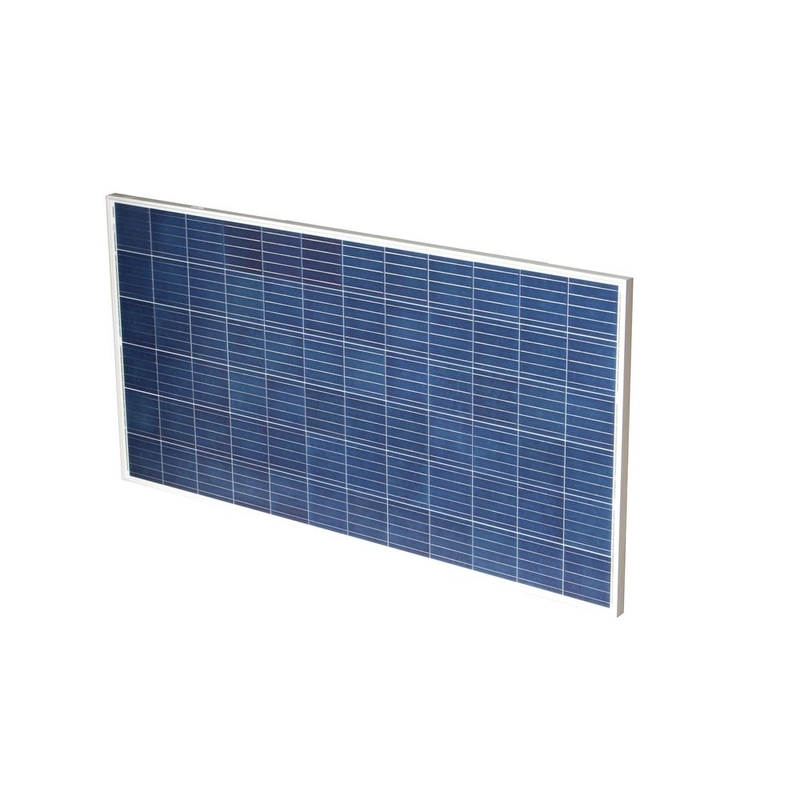
As a practical example, the Tycon Solar® TPS-24-360W panel has a specified output-power temperature coefficient of -0.423% per °C.
That does not mean summer is bad for solar. It means the benefit of longer daylight should not be confused with the temperature-related efficiency of the module itself.
1. Check Whether the Battery Is Actually Reaching Full Charge
Longer summer days provide a useful opportunity to evaluate battery recovery.
If a properly operating system still struggles to recharge its battery during favorable summer conditions, investigate the complete energy balance rather than assuming the problem is a lack of sunlight.
Possible causes include:
- A larger-than-expected equipment load
- Battery degradation
- Shading on the solar array
- Dirty or damaged panels
- Wiring or connector problems
- Incorrect controller settings
- A system that was undersized for the actual load
2. Do Not Treat Summer Battery Overcharge as Normal
A properly selected and configured solar charge controller is designed to prevent uncontrolled battery overcharging.
Once the battery reaches the appropriate charging stage, the controller regulates or reduces charging according to its programmed battery profile.
If battery voltage is climbing outside the manufacturer's recommended range, the solution is not simply to accept it as a consequence of long summer days. Verify the battery chemistry, controller configuration, temperature-compensation behavior and system wiring.
Tycon Solar® offers both MPPT and PWM solar charge controllers for different off-grid system architectures.
More Available Solar Does Not Mean the Battery Must Accept It
Once the battery no longer needs full charging current, a properly configured controller reduces or limits charging. Extra available panel capacity may simply remain unused when the battery is full and the connected load does not require it.
3. Look for Seasonal Shading
The Sun's path changes throughout the year, but so does the environment around a solar installation.
Summer shading can come from:
- New tree growth and foliage
- Tall vegetation
- New construction
- Temporary equipment or containers
- New antennas or mast-mounted hardware
- Changes around the installation that were not present during commissioning
A panel that receives excellent winter exposure can still develop a summer shading problem if nearby vegetation becomes dense enough to obstruct part of the array.
4. Do You Need to Change Solar-Panel Tilt?
Not necessarily.
Some adjustable solar mounts allow seasonal angle changes, and a different tilt may improve energy collection during part of the year. But there is no universal summer adjustment that should be applied to every solar installation.
The appropriate angle depends on latitude, site geometry, the system's seasonal energy requirements, shading, mounting hardware and whether the installation was designed for adjustment.
If the mount is fixed, do not change or improvise its structure merely to chase additional summer production. If it is designed to be adjustable, use the system documentation or a site-specific solar analysis to determine whether an adjustment is worthwhile.
5. Summer Heat Matters Inside the Enclosure Too
Solar panels are not the only components affected by heat.
Batteries, charge controllers, DC converters, PoE equipment, radios and other electronics can all experience elevated temperatures inside outdoor enclosures.
Temperature can affect battery life, charging requirements and electronics reliability. That makes enclosure location, ventilation, equipment spacing and environmental ratings important parts of an off-grid system.
Some current RemotePro® systems include thermostatically controlled enclosure ventilation, but thermal-management features vary by configuration and should be verified for the specific system.
6. Check Whether the Load Has Changed
A system can appear to have a seasonal solar problem when the real issue is an equipment change.
Cameras may have been added. A router may have been replaced. A PoE switch may now power another device. Cooling fans may operate more often in hot weather. New communications equipment may have increased continuous consumption.
Compare the current connected load with the equipment that was used when the system was originally sized.
The Tycon Systems® power and solar calculators can help estimate daily energy consumption when equipment requirements have changed.
7. Use Summer Performance as a Diagnostic Reference
Strong summer solar conditions can provide a useful reference point when troubleshooting an off-grid system.
If battery recovery, charge current or daily system behavior looks significantly different from what the site normally produces under similar clear-weather conditions, it may justify a closer inspection.
Useful information can include:
- PV voltage
- Charging current
- Battery voltage
- Load current
- Temperature
- Historical trends where monitoring is available
8. Remote Monitoring Can Help Identify Changes
RemotePro® is an off-grid solar system family, not a universal monitoring platform.
However, selected RemotePro® configurations use MPPT controllers with communications interfaces that can work with compatible monitoring hardware.
Tycon® TPDIN® monitoring and control products can provide voltage, current, temperature, relay control and related remote-system information in compatible installations.
Eight Things Worth Checking Around the Solstice
1. Is the battery reaching its expected charge state?
2. Is the controller operating without faults or unusual voltage?
3. Has vegetation or another obstruction begun shading the array?
4. Are the panels reasonably clean and physically undamaged?
5. Is enclosure temperature within the equipment's operating range?
6. Has the connected equipment load changed?
7. Are monitoring and communications still reporting correctly?
8. Does the system's performance look reasonable compared with previous similar conditions?
Where RemotePro® Fits
RemotePro® is the Tycon Solar® family for equipment that needs primary off-grid power where dependable utility service is unavailable.
Current systems combine solar generation, battery storage, charge control, outdoor enclosure protection and mounting for applications such as cameras, wireless networks, sensors, telemetry and other field electronics.
Explore RemotePro® off-grid solar power systems →
Where UPSPro® Fits
UPSPro® should not be described as the solar-management component responsible for optimizing a RemotePro® system.
UPSPro® is primarily an outdoor battery-backup family for equipment that already has a normal AC, DC or PoE power source but needs continued operation during an interruption.
If a remote device already has dependable primary power and the concern is outage protection rather than primary off-grid solar generation, UPSPro® may be the more appropriate starting point.
Summer Solstice Solar FAQs
When is the summer solstice in 2026?
The June solstice occurs on Sunday, June 21, 2026. It marks the beginning of astronomical summer in the Northern Hemisphere and produces the longest daylight period of the year for most northern locations.
Do solar panels produce the most power on the summer solstice?
Not necessarily. The long day provides a large window for solar generation, but clouds, temperature, panel orientation, shading and local weather affect actual energy production. Hot solar cells also generally operate at lower voltage than cooler cells.
Can too much summer sunlight overcharge my batteries?
A correctly selected and configured solar charge controller should regulate charging as the battery reaches its required voltage. Unexpectedly high battery voltage should be investigated rather than treated as normal summer behavior.
Should I change my solar-panel angle for summer?
Only if the mounting system is designed for adjustment and the change makes sense for the site's latitude, seasonal energy requirement and installation geometry. Seasonal adjustment is not required for every solar system.
Does heat reduce solar-panel efficiency?
Generally, yes. Higher cell temperatures reduce photovoltaic voltage and typically reduce maximum module power. The specific effect is defined by the temperature coefficients published for the solar panel.
Is MPPT always better during summer?
MPPT can provide important advantages in many off-grid systems, particularly where PV voltage is substantially higher than battery voltage. But summer does not automatically make PWM unsuitable. Controller selection should be based on the complete array and battery architecture.
What should I check if summer solar production seems low?
Check shading, panel condition, PV voltage, charging current, battery condition, controller status, wiring, connected load and recent weather. Compare current performance with previous similar conditions when historical data is available.
Is Your Remote Solar System Performing as Expected?
If you are designing a new system or an existing installation is not maintaining the battery or runtime you expect, start with the equipment load, location, solar conditions, battery capacity and controller configuration. Tycon Systems® can help determine the appropriate off-grid power architecture.
Request a System Design → Visit the Support Portal